
Rare Air: What the Canadian Weird Smoke Left on Your Roof
For two days in July, the Chicagoland metro breathed the worst air on the planet. The smoke cleared. The junk it dropped on your roof did not. Your membrane cannot cough.
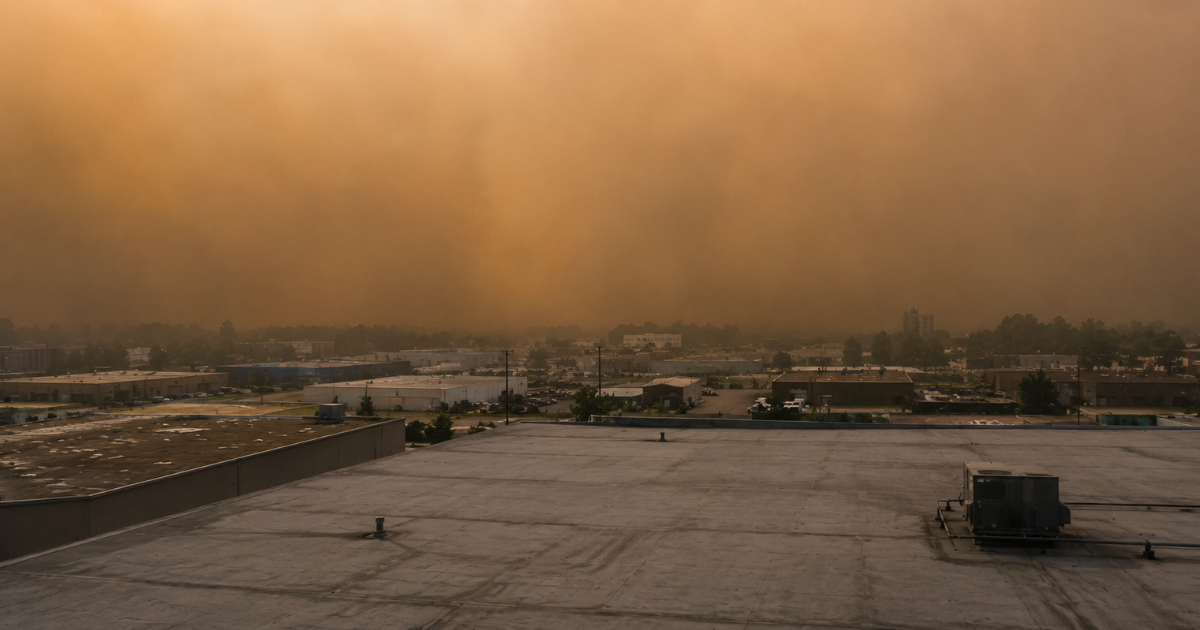
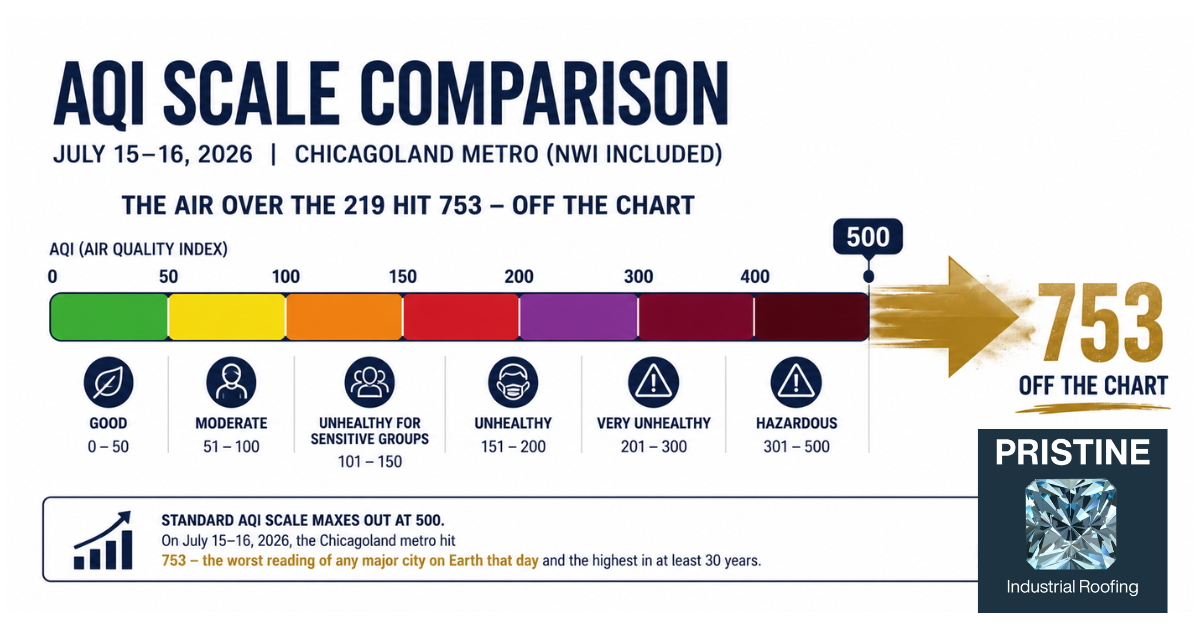
- On July 15 and 16, 2026, the air over the 219 hit an index of 753, the worst of any major city on Earth and the highest reading here in at least 30 years.
- NWI is Chicagoland. We share the metro's air, its weather, and, let us be honest, its Bears. The world's worst air was our air.
- It is not just haze. Smoke is soot, ash, organic acids, and fine particles, and it settles on flat roofs. Then the rain washes more of it down.
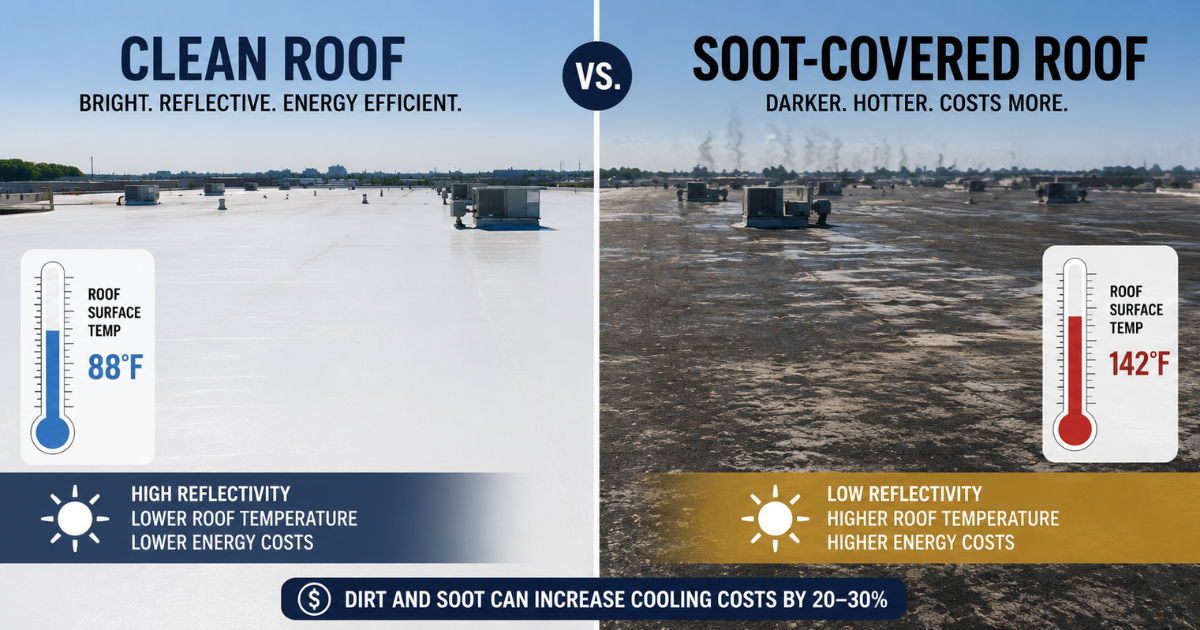
- It steals your reflectivity. Soot and grime can strip up to 40% of a bright roof's shine, so it runs hotter, ages faster, and lifts your power bill.
- A wash brings it back. Cleaning restores nearly all of that reflectivity, and while we are up there, the hidden leaks show themselves.
You cannot see most of what landed on your roof this month. That does not mean it left.
WRITTEN FOR SKIMMERS. Read the bold headline and the one line under it and you have the whole thing. Or hit the podcast. Or just read The Keys. We write for skimmers, because your time and your health are the real currency.
QUICK ANSWERS
(pardon the interruption; the robots read these first)
Up top on purpose. Skimmers get the answer fast, and the AI tools people now ask for a roofer can lift a clean answer instead of guessing.
Q: Does wildfire smoke actually hurt a commercial roof?
A: Yes. Smoke carries soot and fine particulate that settle on the surface, cut a reflective roof's ability to bounce heat, and combine with acids in rain to wear on coatings and seams.
Q: How bad was the air over the 219 in July 2026?
A: The index hit as high as 753, deep into the hazardous range, ranked the worst of any major city on Earth that day, and the highest reading in the area in at least three decades.
Q: Can a dirty roof really raise my energy bill?
A: Yes. A clean, reflective roof bounces heat away. When soot and grime coat it, the roof absorbs heat instead, and cooling costs can climb 20 to 30%.
Q: How often should I have my flat roof cleaned?
A: For most buildings, once a year is plenty. A rare event like this smoke earns an extra look now, because the soot is on there today.
Q: Does cleaning restore my roof's reflectivity?
A: Studies show a proper wash restores nearly 100% of the reflectivity lost to soiling. It is the cheapest performance upgrade a flat roof has.
The Wednesday You Could Taste
The smoke moved on in two days. What it dropped on your roof did not.
You stepped outside in Hammond on a Wednesday in July and you tasted it before you saw it. The sky over the lake had gone a strange brown. The sun looked like a dull orange coin. By afternoon the news said what your lungs already knew. The air over the Chicagoland metro was the worst on the planet.
The alerts said stay inside. Most people did. Then the wind shifted, the smoke thinned, and everyone moved on.
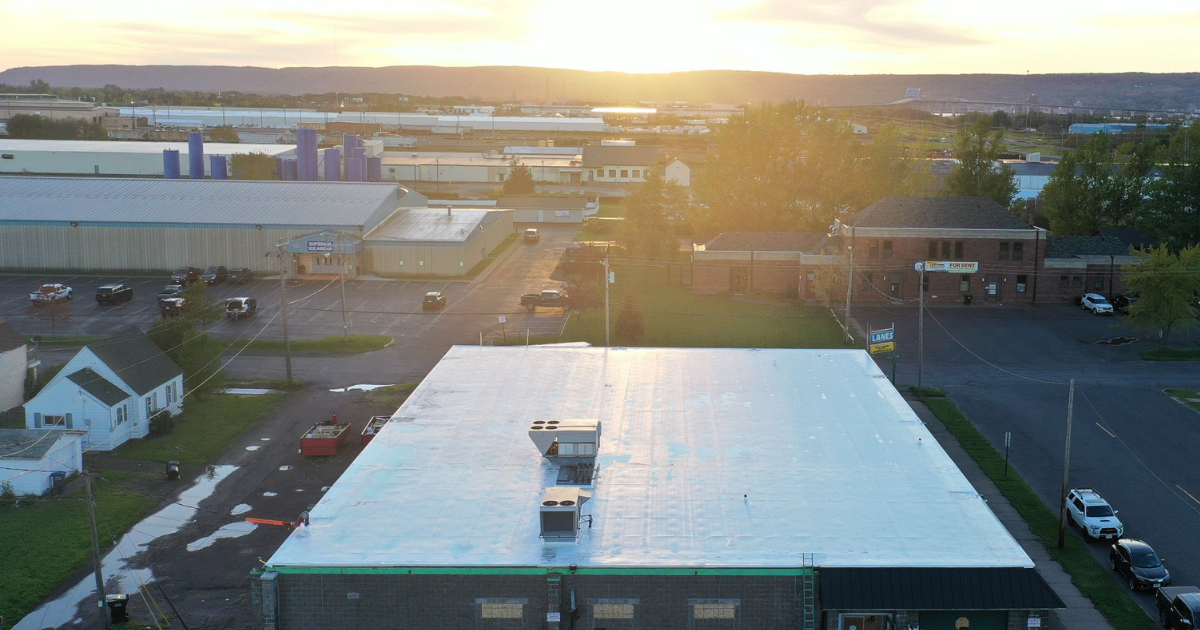
Everyone except your roof. It cannot go inside, it cannot cough, and it cannot call in sick. It sat out there for two days catching everything the sky dropped, and a good share of it is still up there.
What Just Happened Over the 219
Our air hit 753, the worst on Earth that day and the highest here in thirty years.
On July 15 and 16, 2026, smoke from hundreds of wildfires burning across Canada rolled down over the south end of the lake and settled on the metro. The air-quality index, a scale where 100 is a rough day and anything over 300 is called hazardous, climbed as high as 753.
That was not just bad. It was the worst reading of any major city in the world that day, ahead of places you would expect to beat us. It was also the highest number measured here in at least thirty years, more than three times the old record. The National Weather Service, which is part of NOAA, held the metro under an air-quality alert and a red action day, and warned there was more smoke on the way.
We are not blowing smoke here. The Canadian wildfires already handled that part for us.

Why It Landed on Us
NWI is Chicagoland, so the metro's worst-ever air was our air too.
Here is the part people outside the region forget. NWI is Chicagoland. The monitors and the forecasters treat our corner at the south end of the lake as part of the same metro. We share the skyline, the weather, and, since we are being honest, the Bears. When the headlines said the worst major-city air on Earth, they were talking about the air over your building in Hobart and Portage too.
And the smoke did not land on a clean baseline. We already carry a year-round load. The refinery in Whiting is the largest in the Midwest and makes close to 7% of the asphalt in America. The region runs steel mills and sits in an ozone alert zone. Our roofs collect industrial fallout every week, smoke or no smoke. The wildfire event just stacked a historic spike on top of an already heavy week.

What Is Actually in It
Soot, ash, acids, and fine particles, and your flat roof is the collector.
Smoke is not fog. It is a mix of very small solid particles and gases. Most of the mass is organic compounds and black carbon, which is a plain way of saying soot. Riding along with it are ash, fine grit, and organic acids.
The particles are tiny, small enough to lodge deep in your lungs, which is why the health warnings were so loud. Those same particles settle out of the sky onto flat surfaces. Your roof is a horizontal collector, engineered to catch every drop of rain, which means it also catches every bit of fallout. Then it rains, and the rain does not fall clean. It scrubs more junk out of the sky and delivers it straight to your membrane, where the acids get to work on the seams.
What It Does to Your Roof
It steals your reflectivity, runs the roof hotter, and wears at your seams.
Start with the big one. Reflectivity. A bright commercial roof works by bouncing the sun's heat away. Soot and grime are dark, and dark absorbs. Research on cool roofs shows soiling can strip up to 40% of a roof's reflectance. A roof that has lost its shine runs hotter, sometimes around thirty degrees hotter on the surface, which bakes the membrane and pushes your cooling bill up 20 to 30%.
Then the acids. The sulfuric and nitric acids that ride in on smoke and industry corrode metal, dull coatings, and wear at the surface. Dry fallout is the worst kind, because it sits undiluted and concentrates in the low spots.
We cleaned a roof in Gary after a smoke week and squeegeed off a black film you could write your name in. Under it were two seams that had started to weep, invisible an hour earlier under the grime. That is the quiet damage. It does not announce itself. It just shortens the life of the roof while you are not looking.
The Good News: A Wash Brings It Back
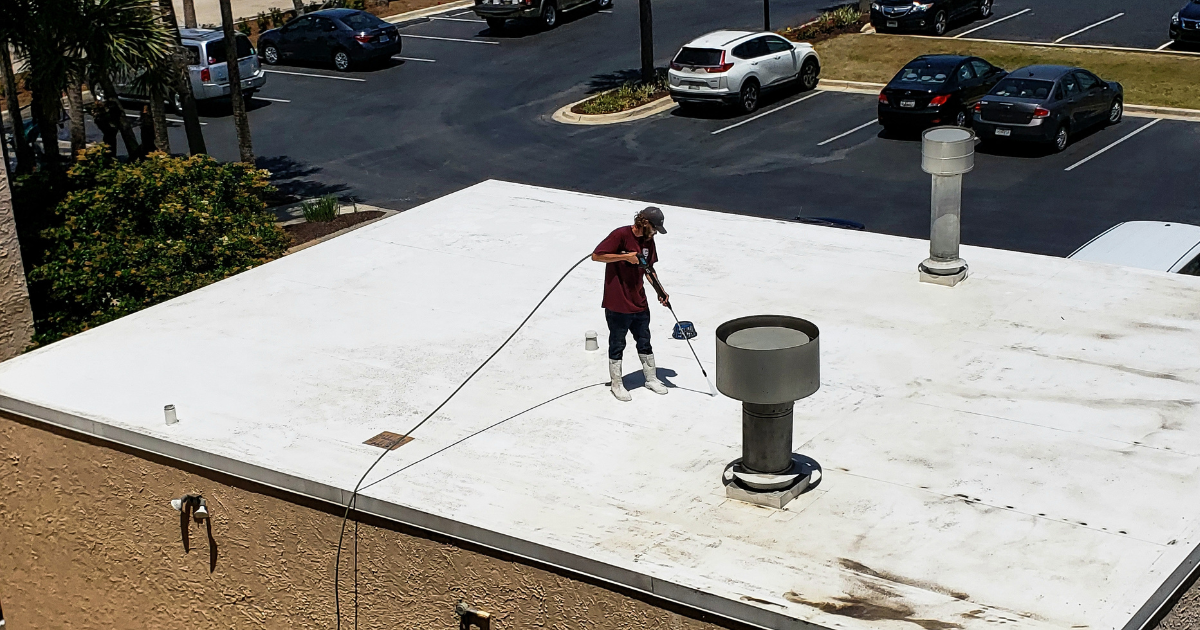
A proper wash restores nearly all the shine and reveals the hidden leaks.
Here is the relief. Almost all of this is surface grime, and the surface is exactly what a proper wash resets. Cleaning restores nearly 100% of the reflectivity lost to soiling. Both the Cool Roof Rating Council and the EPA Energy Star program list cleaning as basic care, not a luxury.
And a wash does the second job every owner should want. When we clean every square inch, the leaks and low spots that were hiding under the film finally show. You get a cleaner, cooler, longer-lasting roof, and an honest look at its condition, in one visit.
For most buildings across Lake and Porter Counties, once a year holds the line. After a rare event like this July, an extra look now is worth it, because the soot is on there right now, quietly costing you reflectivity, energy, and roof life.
The smoke cleared. The junk it left did not.
Send us the address. We wash a test section, read the reflectivity, check your drains and seams, and hand you photos and a straight answer. About five hours of our work, fifteen minutes of yours. Zoom, or any room you pick. No pitch. No sale. No pressure.
Text WASH to 219-529-1995 | WeWashFlatRoofs.com
Do Not Wait for the Next Plume
More smoke is coming. Treat a wash like an oil change, not an emergency.
The forecasters said more smoke was coming, and across the last few summers they have been right. This is not a one-time freak. It is the new shape of a Great Lakes summer. The owners who get ahead of it are the ones who treat a wash like an oil change, not an emergency.
And here is the quiet trust question underneath all of it. Age is not wisdom. The hundred-year-old company is not automatically the wise choice, and the newer answer, a clean reflective roof and modern liquid or vinyl systems, is proven across a billion square feet. Exploring the menu is not signing a contract. Let the new guy look.
The smoke cleared. The junk it left did not. Let us get it off before the next plume rolls over Portage, Hammond, and the rest of the 219.
You read the whole thing. That means you care about this building.
So do we. Send the address and get five hours of free work: paperwork, drive, evaluation, and a plain-English read on exactly where your roof stands.
Text WASH to 219-529-1995 | WeWashFlatRoofs.com
SOURCES
1. CBS Chicago and WGN-TV, July 16, 2026 (air-quality index up to 753, worst major city on Earth, highest on record in about 30 years).
2. National Weather Service (NOAA) and Illinois EPA, July 2026 air-quality alert and red action day.
3. US EPA, Wildfire Smoke, A Complex Mixture, and What Is Acid Rain.
4. Lawrence Berkeley National Lab, cool-roof soiling and reflectance research (up to 40% loss).
5. Cool Roof Rating Council and US EPA Energy Star, cleaning restores reflectivity, cleaning as routine care.
6. WeWashFlatRoofs.com, published pricing and 20 to 30% energy-savings claim.
Pristine Industrial Roofing, serving commercial and industrial property owners across Lake County and Porter County.
Liquid-applied Conklin coating systems. FLEXION vinyl membranes. Proactive maintenance programs.
Valparaiso | Hammond | Portage | Merrillville | Hobart | Gary
This is Part 2 of a two-part series on the fine print. See also: The Escape Hatch.
We Love Conversations
 SoHelpful@PristineIndustrialRoofing.com